Cosplay Font Review: Elegant Script for Branding
I was staring at a blank brand board for a boutique skincare line last Tuesday, trying to find the right emotional hook. The client wanted something that felt handmade and intimate but still retained a sense of high-end luxury. I scrolled through my library of script fonts, skipping over the ones that felt too rigid or overly casual. Then I loaded up Cosplay. It wasn’t just another addition to my folder of Fonts; it immediately changed the mood of the entire layout.
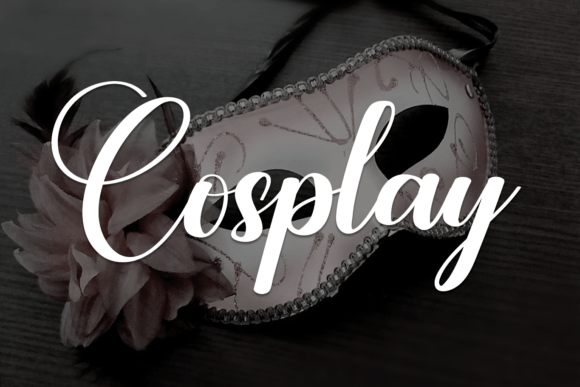
Cosplay is a delicate, elegant, and flowing handwritten font that manages to strike a rare balance between approachability and sophistication. As a designer who tests dozens of typefaces weekly, I can say that its well-balanced characters make it incredibly versatile. It doesn’t scream for attention; instead, it invites the viewer in. In this review, I’ll walk you through how this premium font from Script Amp performs in real-world design scenarios, from logo concepts to packaging mockups.
The Visual Personality of Cosplay
When you first type out a word in Cosplay, the immediate impression is fluidity. The strokes are smooth, with natural entry and exit points that mimic the movement of a genuine pen on paper. This isn’t a digitized scrawl that looks choppy at larger sizes; it is a refined typeface designed with intention. The elegance comes from the subtle variations in stroke weight, which give it a dynamic, organic feel without sacrificing legibility.
In my testing, I found that Cosplay excels as a display font. It has enough personality to stand alone as a logo mark but remains graceful enough to work within a broader brand identity system. The characters are open and airy, preventing the text from feeling cluttered. This makes it an excellent choice for creative projects where whitespace is a key design element. Whether you are working on a bakery’s signage or a photographer’s watermark, the font’s inherent charm adds a layer of professionalism that feels curated rather than generic.
Real-World Application: From Logo to Packaging
To truly understand a font, you have to see it in context. I applied Cosplay to several assets for a hypothetical artisanal candle brand. Here is how it held up across different mediums:
- Logo Design: As a primary logotype, Cosplay shines. I used it for the brand name, and the flowing connections between letters created a cohesive unit. It looked particularly strong when centered with ample padding, acting as the focal point of the logo design.
- Packaging Design: On a minimalist label mockup, the font added a tactile quality. Even when scaled down for a small product sticker, the essential shapes of the letters remained distinct. However, I noticed that for very small ingredient lists, it was better suited as an accent rather than body text.
- Social Media Graphics: For Instagram posts featuring quotes or short announcements, Cosplay provided an instant aesthetic upgrade. It pairs beautifully with high-quality photography, adding a human touch to digital social media graphics.
- Web Design: In a website hero section, the font worked well for headlines. It loaded quickly and rendered cleanly on both desktop and mobile screens, proving its viability for modern web design applications.
The versatility of Cosplay means it matches a wide pool of designs. It is not limited to one industry. I could easily see it working for a wedding stationery suite, a creative studio’s business card, or a local café’s menu board. Its adaptability is one of its strongest assets in a designer’s toolkit.
Pairing Cosplay with Other Typefaces
A great script font rarely works in isolation. To build a complete visual hierarchy, you need to pair it with complementary typefaces. During my project, I experimented with several combinations to see what enhanced Cosplay’s elegance.
I found that pairing it with a clean sans serif font created a modern, balanced look. The geometric simplicity of a sans serif grounds the flowing nature of the script, making the overall composition feel stable and contemporary. This combination is ideal for editorial design or corporate materials that need a touch of warmth without losing professionalism.
Alternatively, pairing Cosplay with a classic serif font amplified its traditional elegance. This duo works wonderfully for luxury brands, boutiques, or any project aiming for a timeless aesthetic. The contrast between the structured serifs and the free-flowing script creates visual interest and guides the reader’s eye naturally through the content. When selecting your font pairing, always consider the mood you want to evoke. Cosplay is flexible enough to support both modern and traditional directions.
Limitations and Best Practices
While Cosplay is a powerful tool, it is not a one-size-fits-all solution. As a decorative font and accent font, it is best used for short phrases, headlines, and logos. It is not suitable for long paragraphs of body text. The intricate details that make it beautiful at large sizes can become illegible when scaled down too far or used in dense blocks of text. If you are designing a annual report or a technical manual, this is not the right commercial font for the job.
Additionally, avoid using Cosplay in all caps. Like most handwritten scripts, it loses its natural rhythm and readability when forced into uppercase-only formats. Always respect the lowercase structure to maintain its authentic hand-lettered feel. Before finalizing any client work, I recommend testing the font at various sizes and on different backgrounds. Check how it performs in black and white, as well as in color, to ensure the contrast is sufficient for accessibility.
Licensing and Final Thoughts
Before you download and start creating, always review the licensing agreement. Whether you are using Cosplay for a personal hobby project, a client’s brand identity, or a print-on-demand product, understanding the rights is crucial. Ensure that your license covers commercial use if you plan to sell designs featuring the font. Most reputable foundries, including those offering design assets like Script Amp, provide clear guidelines on webfont usage, app embedding, and merchandise rights.
In conclusion, Cosplay is a standout addition to any designer’s library of Fonts. It offers a blend of delicacy and strength that is hard to find in many other script options. Whether you are refreshing a local restaurant’s logo or creating a new line of handmade goods, this creative font provides the elegance and flow needed to elevate your work. It is a reliable, beautiful, and practical choice for designers who value both aesthetics and functionality in their modern typography systems.